
TMT TEST
Evaluating Your Heart’s Response to Stress
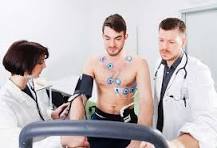
The Treadmill Test (TMT), commonly referred to as a stress test, is a specialized electrocardiogram (ECG) performed while jogging on a treadmill or riding a stationary bike. This dynamic assessment meticulously monitors your cardiac rhythms, blood pressure, breaths per minute, and heartbeat under physical exertion. Typically, doctors advise a TMT for patients who experience angina symptoms (chest discomfort caused by restricted blood flow to the heart), have a history of a previous heart attack, or have undergone bypass surgery.
🩺 What is the Need for the TMT Test?
The TMT evaluates your heart’s capacity to manage physical stress, aiding significantly in diagnosing underlying cardiac problems. It is highly recommended if you are beginning a rigorous exercise regimen, receiving cardiac therapy, or preparing for heart surgery.
Primary Medical Causes
- Diagnosis of CAD: Detects coronary artery disease or damage from cholesterol/plaque buildup.
- Arrhythmia Diagnosis: Identifies faulty electrical impulse coordination.
- Treatment Planning: Prepares an actionable plan for cardiac conditions.
- General Evaluation: Assesses overall cardiovascular health.
Symptoms Requiring a TMT
A doctor may urgently advise this test if you experience:
The Step-by-Step Procedure
The test is completed without hospitalization. Patients should arrive empty-handed and wear suitable walking shoes to prevent discomfort. After receiving consent, the patient’s chest is exposed (females are given a robe) to attach multiple ECG leads connecting them to the monitor.
- Demonstration: The technician demonstrates treadmill walking. Once at ease, the patient stands on the machine.
- Starting Slow: The patient begins walking at a steady rate, keeping a straight back and forward gaze. Technicians ensure complete comfort and guidance.
- Gradual Incline: Initially slow with a slight incline (like climbing a small hill). Blood pressure is recorded every three minutes.
- Increasing Intensity: The test is divided into three-minute sections. The treadmill simultaneously speeds up and inclines further, becoming tougher with each level, while BP and heart rate are continuously tracked.
- Safety First: The test is immediately interrupted if requested, if chest discomfort arises, or if the patient cannot walk comfortably.
- Cool Down: Before finishing, the patient unwinds, and a final BP reading is obtained.
- Completion: The full exam takes 30 to 45 minutes, depending on exercise capability. Afterward, ECG leads are removed, and the patient dresses.
- Immediate Results: The report is made available right after the exam, followed by diagnostic suggestions.
Interpreting TMT Results & Normal Ranges
During the test, you must exercise at a target heart rate of around 85% of your maximum. Your maximum expected heart rate is calculated by deducting your age from 220 (e.g., for a 40-year-old: 220 - 40 = 180 bpm).
Test Outcomes
- Negative Result: The ECG did not change when the heart rate reached the target level (Normal/Healthy).
- Positive Result: Denotes post-workload ECG modifications, indicating potential cardiac issues.
Heart Rate Recovery
Calculated by deducting the heart rate one minute after exercise from the peak heart rate.
- < 12 bpm in walking recovery = Abnormal
- > 12 bpm in walking recovery = Normal
- < 18 bpm lying on the back = Abnormal
- > 18 bpm lying on the back = Normal
Exercise Tolerance (METS)
Tolerance is measured in Metabolic Equivalents (METS) — oxygen uptake expressed in kg/minute.
Poor
Fair
Good
Excellent*
*Any METS score above 10 indicates a 5-year survival rate of around 95%.
⚠️ Risks Associated with the TMT Test
While the TMT is a secure examination conducted by medical experts, it does carry minor hazards. It is generally not recommended for completely asymptomatic individuals without good cause, as false positives can result in undue anxiety and elevated blood pressure.
Potential risks include:
- • Walking on a treadmill and collapsing or fainting.
- • Experiencing chest pain.
- • An irregular heartbeat lasting for a long time.
- • Rare complications: Occasionally, the exertion can trigger a heart attack, though this is incredibly rare (affecting roughly 1 in 10,000 persons).
Final Thoughts
The Treadmill Stress Test (TMT) is a safe, non-invasive, and reasonably priced screening procedure essential for identifying Coronary Artery Disorders (CAD). For individuals at higher risk of developing cardiovascular problems, it remains a crucial diagnostic tool. With a thorough understanding of candidates, procedure, and results, you are now better equipped to actively assess and manage your cardiac health.